The squad size was very small back then, compared to now. There was only 1 substitute allowed. The number on the shirt meant something. 1 was goalkeeper. 2 was right back. 3 was left back. etc. We knew who the first 11 would be every week, it was rare for it to change. The only thing I noticed was that John Harris would sometimes alternative Barlow with Flynn, as the home crowd didn't seem so keen on Frank Barlow. 12 was substitute. It was the same for most teams, so it was easy to know the team when the programme was printed a few days before the game. Back then, an "injury" usually meant a broken leg, something serious that would keep someone out of the team. None of this "hamstring" and "calf-strain" nonsense. Players played 3 times a week regularly, on pitches that resembled ploughed fields at times. They didn't get "tired" and need to be "rested". Squad rotation wasn't an option.
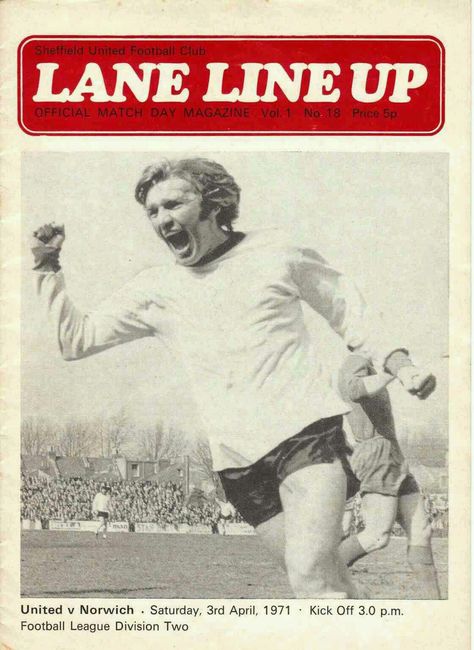
I'd say the team listed in the programme was accurate more often than not, however, it was routine to take a pen to the game, buy a programme, and cross out the names of any player who wasn't playing, and write in the name of the substitute.
The programme was worth buying back then. It wasn't a mass produced multi-paged glossy thing full of adverts - it was a simple journal of the events of our club as the season unfolded. And in addition to the team sheet, it had a list of all that days fixtures in the back, and each one had a letter. Sheffield Wednesday's fixture was always "A". If you bought a programme you would be able to check the scores as they came in by referring to your programme and watching the man carry the numbered tiles to the manual scoreboard at the Bramall lane end.
I'm not going to say football was better then, because I think the standards of football are much higher today and the footballers are more athletic. But some things were better. It was certainly much more atmospheric, with bigger crowds. The way the game was played was very different back then. Tackles and punches were flying in all over the place. It was a more gladiatorial and engaging experience and very unrefined compared to today. The toilets at the top of the kop were often swimming 6 inches deep in urine at half-time. We learned to walk on the side of our shoes in order to go for a piss. There was little or no choice in terms of half-time food, apart from pies. There were no telly's to watch, no mobile phones to check. It was all about being there and being totally involved in the experience.





 Nicky johns that is