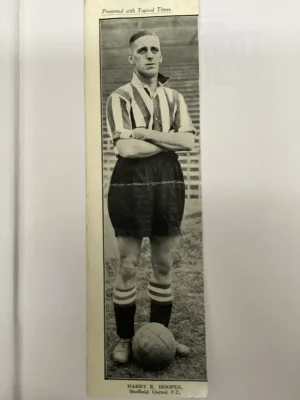
This is a very interesting read IMO. Worth persevering until the end, I think you'll find!
Whoops, I see
Silent Blade has already posted it.
I must refresh
I must refresh
etc...
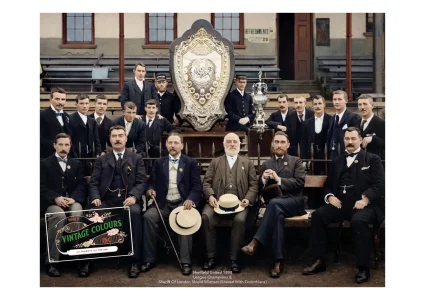
Sheffield United, 1898: Champions of England
The first decade of the Football League was dominated by a small and powerful coterie of clubs. Preston North End, Everton, Sunderland and Aston Villa established themselves as the pre-eminent forces of the new competition, setting standards that others struggled to match. In 1898, that closed circle was finally broken when Sheffield United became the fifth club to be crowned champions of England — a triumph that marked the beginning of a golden era which would last for the next five years.
Sheffield United had been founded only as the inaugural league season of 1888–89 was drawing to a close. They entered the Football League as members of the newly created Second Division in 1892–93, before election to the First Division followed. Progress was rapid and purposeful. By 1896–97, United had assembled a side strong enough to finish runners-up to Aston Villa’s celebrated League and FA Cup double-winning team. Although they drew twice with Villa that season, United finished eleven points adrift — a margin that underlined both Villa’s dominance and Sheffield’s potential.
At the heart of United’s rise were three England internationals: Ernest Needham, Rabbi Howell, and the imposing goalkeeper Willie Foulke. Needham, widely regarded as one of the finest footballers in the league, embodied intelligence and elegance in the half-back line. His subtle use of the ball, positional sense, and calm authority earned him several nicknames, including “Nudger” and the oft-quoted “Prince of Half-Backs”. Across the game, he was respected not only for his ability but for his leadership and sportsmanship.
Howell had joined United in 1890 from Rotherham Swifts and would make history as the first player of Romani descent to be capped by England. Foulke, meanwhile, was a figure of almost mythic proportions. Discovered at Blackwell Colliery, his colossal physique made him a spectacle wherever he played, and later took him to Chelsea. He was both feared and targeted by opposition supporters, who taunted him relentlessly and occasionally resorted to throwing stones. On the pitch, however, he was the bedrock of United’s success.
Defensively, United were resolute if not physically imposing. Howell and Tommy Morren were both under 5ft 6in tall, and height was not their strength. Morren was part of a significant recruitment drive in 1895–96 that also brought Fred Priest, Harry Johnson and Walter Bennett to Bramall Lane. They were later joined by Jack Almond, the son of a wealthy brewer, and the Scottish forward Ken McKay from Hamilton. On the eve of the championship season, United strengthened further with the signing of the well-travelled Scottish forward John Cunningham from Preston North End.
At full-back, Harry Thickitt, signed from Rotherham County for just £30, provided grit and reliability, earning a single England cap in 1899. Alongside him was Bob Cain, a Scot recruited from Bootle in 1891. Behind them all stood Foulke — the giant custodian around whom United’s formidable defensive structure was built.
Sheffield United were among the best-supported clubs in the country. During the 1897–98 season they attracted average home crowds of over 11,500 at Bramall Lane, a figure bettered by only three rivals. Foulke and Needham, earning £3 10s a week, were the highest-paid players at the club and among the best-remunerated in the league.
United began the season strongly and remained unbeaten until December, when they were edged 2–1 at Stoke City. A home defeat to Liverpool in their final match of 1897 briefly checked momentum, but the new year brought a decisive statement of intent. United defeated reigning champions Aston Villa twice, including a famous 2–1 victory at Villa Parkbefore a crowd of 43,000. A resounding 4–0 win at Anfield followed, avenging their earlier defeat by Liverpool.
A difficult spell followed, with defeats against Notts County, West Bromwich Albion, and Sunderland — the latter match proving especially painful, with Howell scoring two own goals. By March, United’s once-comfortable five-point lead had been reduced to just one, with Sunderland holding a game in hand.
The title race reached its climax on 2 April 1898, when Sunderland visited Bramall Lane. United were without Needham, who was away on England duty, while Sunderland had controversially refused to release Ned Doig and Hugh Wilson, adding a sharp edge to the encounter. In front of a tense crowd, United prevailed 1–0, thanks to a late goal from Johnson, restoring a three-point advantage.
A week later, United travelled to Bolton while Sunderland faced Bury. Needham, deployed in the unfamiliar role of centre-forward, scored the decisive goal in a 1–0 win, while Sunderland were beaten at Gigg Lane. The championship was secured. United completed the season with a 2–0 victory over West Bromwich Albion, played in torrential rain — fitting conditions for a side built on resilience and resolve.
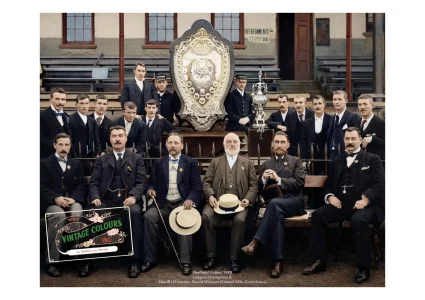
As league champions, Sheffield United were invited to contest the inaugural Sheriff of London Charity Shield against Corinthian, the foremost amateur side of the era and a major supplier of England internationals. The competition had been proposed by Sir Thomas Dewar, Sheriff of London in 1897, who intended it as a prestigious charitable fixture. The shield itself was the largest ever modelled, standing 5ft 9in high and 3ft 4in wide, and was accompanied by the promise of 15-carat gold medals for the players.
The first match, played at Crystal Palace on 19 March 1898 before 20,000 spectators, ended in a goalless draw on a heavy pitch. United’s half-back line of Needham, Morren and Johnson dominated proceedings, while Thickitt and Cain held firm at the back. A replay on 4 April also ended level, this time 1–1, with Almond scoring for United before Corinthian equalised from a controversial retaken free-kick. United declined to play extra time, alleging unfairness in the officiating, and the honour was shared.
Together, the Football League Championship trophy and the vast Sheriff of London Charity Shield symbolised Sheffield United’s arrival at the summit of English football in 1898 — not merely as cup-winners or challengers, but as champions of the league itself. It was a season that transformed the club’s standing and secured its place among the elite of the Victorian game.












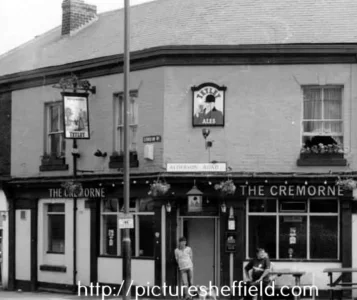



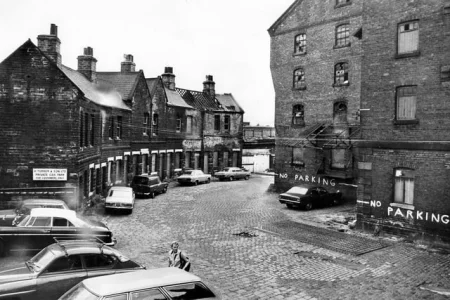
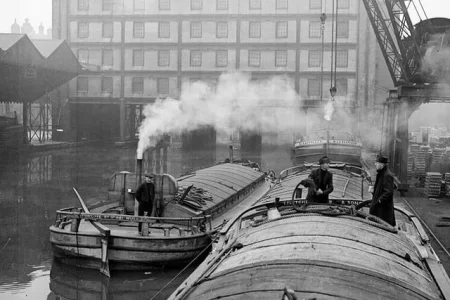
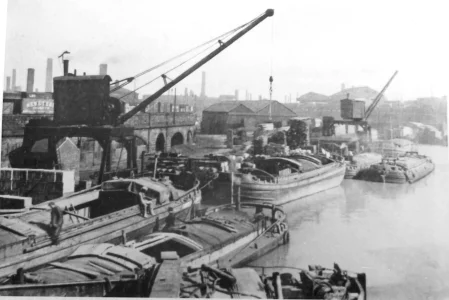
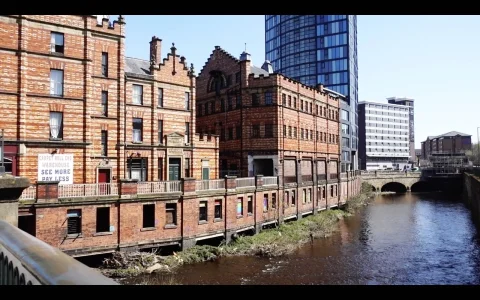
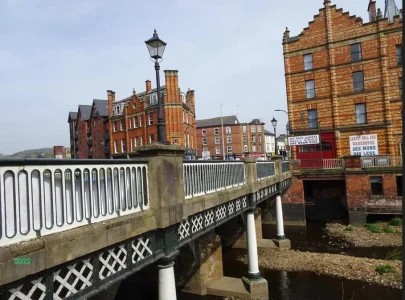
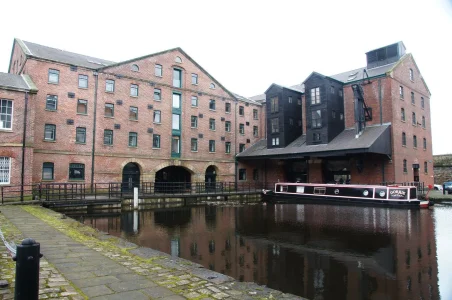
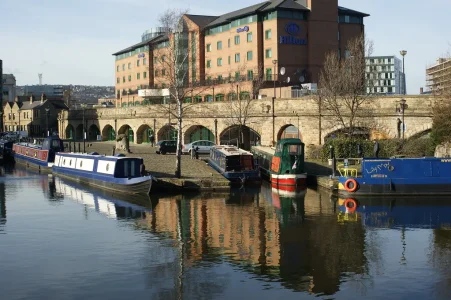
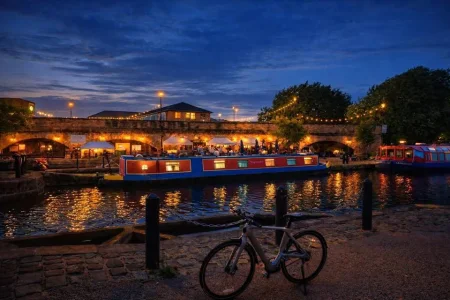

 . I used to walk down there from work on West Bar aged 17 to meet him and then drive home through rush hour traffic as practice for my driving test. He must have been mad! His white Sierra Sapphire LX remained fully intact thankfully.