Jolly good thenIn all honesty, yes I do, because I was party to the fair trading rules that the BBC had to follow when dealing with third parties, including their commercial subsidiaries.
That argument about whether they could stand on their own two feet without subsidy is a separate one, and doesn’t make the public arm of the BBC a commercial entity, whether you like it or not

Navigation
Install the app
How to install the app on iOS
Follow along with the video below to see how to install our site as a web app on your home screen.
Note: This feature may not be available in some browsers.
More options
Style variation
You are using an out of date browser. It may not display this or other websites correctly.
You should upgrade or use an alternative browser.
You should upgrade or use an alternative browser.
BBC Fact checkers extraordinaire
- Thread starter TCsLoveChild
- Start date
All advertisments are hidden for logged in members, why not log in/register?
Menage a petit pois
Member
- Joined
- Mar 14, 2019
- Messages
- 384
- Reaction score
- 861
Hey woolford.... What's your view on tax avoidance?? Is that OK to not pay any just cause the govt is wank (and you're a greedy cunt)?? Asking for my mate Nadeem Zahawi?!No, plenty of other channels manage to produce better content without a model that involves freeloading from the general public.
Cool...I currently don't watch the BBC and I get to pay nothing. Seems like a better deal
What an unfortunate waste.
I don't watch any of those.
I beg to differ, if you tried to impose a TV tax on the Americans, you'd have a second Boston Tea Party on your hands.
It's a national broadcaster. Russia, China and North Korea have those as well.


Rodley
Well-Known Member
I beg to differ, if you tried to impose a TV tax on the Americans, you'd have a second Boston Tea Party on your hands.

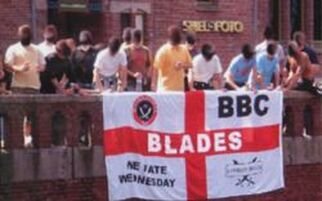
scouseblade
Active Member
You a freeview guy then?No, plenty of other channels manage to produce better content without a model that involves freeloading from the general public.
Cool...I currently don't watch the BBC and I get to pay nothing. Seems like a better deal
What an unfortunate waste.
I don't watch any of those.
I beg to differ, if you tried to impose a TV tax on the Americans, you'd have a second Boston Tea Party on your hands.
It's a national broadcaster. Russia, China and North Korea have those as well.

- Joined
- Jun 5, 2022
- Messages
- 5,053
- Reaction score
- 17,001
- Banned
- #35
You a freeview guy then?
I don't really do much telly, truth be told. Mostly Amazon Prime or YouTube. I had Netflix but it was shite for too long so I cancelled.

Moan? Nope-I saw Longhorn
A Chippy Northern Ape
You’re clearly not aware that the (new) definition of “greedy cunt” is (apparently) “Careless” ?!?Hey woolford.... What's your view on tax avoidance?? Is that OK to not pay any just cause the govt is wank (and you're a greedy cunt)?? Asking for my mate Nadeem Zahawi?!

Brewster Cost £70 million
Huge member
- Joined
- Feb 9, 2021
- Messages
- 2,427
- Reaction score
- 4,577
- Banned
- #37

Ainsley Harriott
I saw this thing on itv the other week
- Joined
- Aug 18, 2016
- Messages
- 21,585
- Reaction score
- 41,107
They probably should. Show proof of private health are and become exempt from NI contributions for whatever period you're private.Not for those who can afford private health care, maybe they should refuse to pay any National Insurance.
As for the license fee, it's not a law. You're not obliged to pay it. You just choose to. There's no detector vans. They don't bring warrants to your house. You don't go to prison. It's one of the biggest con jobs going. My dad is convinced of the detector vans. He refuses flat out to listen to why it isn't illegal to have a TV license. "If they can see you watching TV, you need a license"
'What if I'm watching Netflix? Or playing PlayStation?'
"What about it?"
'Well, I'm not watching live tele so I don't need one. Just because I have a TV in the house does not mean I must have a TV license'
"Look, I know enough about it to know you need one"
Everything in that last sentence is wrong but he's a good guy so I'll let him be.

DaleHillBlade
With the luck of the Irish
I pay the licence fee and it’s only R4 that makes me feel it’s money well spent.
We should give the money paid for the tv licence to the NHS and let the BBC fund itself with adverts.I'd subscribe to BBC films and dramas and possibly some radio shows, but I'd rather evade the state propaganda shows which I resent being forced to pay for. Britbox is a good alternative. I also resent the ridiculous salaries a lot of the 'stars' are on. Largely for shows I have zero interest in.
The NHS has been deliberately hollowed our and destroyed by the worst elements in society (often promoted by the BBC) and it's absolutely essential it is saved and returned to its founding principles. I see no comparison.

Tom Bott
Well-Known Member
- Joined
- Oct 27, 2017
- Messages
- 8,325
- Reaction score
- 14,317
I'd rather evade the state propaganda shows
Though during the last election equal numbers of complaints were received from both Labour and Tory supporters.

BBC election coverage draws more complaints from Tory than Labour supporters
Broadcaster inundated with feedback suggesting it favoured Jeremy Corbyn’s party
Press Releases – The Labour Party
 labour.org.uk
Which makes a non sense of the 'political bias' spouted by both sides.
Yet both sides will continue to argue that the BBC is against their own personal political agenda - read religion.
Though the BBC as a publicly funded body, has a duty to 'support' whichever democratically elected government is in power at the time, as part of the democracy that we enjoy.
b1ade4life
Member
- Joined
- Jan 15, 2023
- Messages
- 940
- Reaction score
- 2,321
Is ceefax still going??
Tom Bott
Well-Known Member
- Joined
- Oct 27, 2017
- Messages
- 8,325
- Reaction score
- 14,317
You don't have to pay for Disney+, or Netflix
Though if it's included in your cable package as a 'freebie' at $ 50 per month it's not really that free.
I just checked with my brother in California......

SheepdipBlade
Active Member
So why is it that every whack job coup d'etat heads straight for the national broadcaster if it doesn't fulfil an essential service.The NHS is an essential service. Mrs Brown's Boys is not.
- Joined
- Jun 5, 2022
- Messages
- 5,053
- Reaction score
- 17,001
- Banned
- #45
So why is it that every whack job coup d'etat heads straight for the national broadcaster if it doesn't fulfil an essential service.
Seems like a good reason for not having one then if totalitarian dictators only occur in countries with state broadcasters...
Ainsley Harriott
I saw this thing on itv the other week
- Joined
- Aug 18, 2016
- Messages
- 21,585
- Reaction score
- 41,107
Poltifact or fullfact would mark the OP down as misleading at a minimum.
Love fact checkers me
Love fact checkers me
Freeview how come it's not free?You a freeview guy then?

Alex Cheeseright
Well-Known Member
- Joined
- Mar 13, 2019
- Messages
- 4,407
- Reaction score
- 4,670
Screw cable, satellite and stick with streaming. Pay for what you want and not pay for what you don't... It's simple

nopigfansintown
Well-Known Member
- Joined
- Jan 31, 2016
- Messages
- 8,046
- Reaction score
- 15,533
Though during the last election equal numbers of complaints were received from both Labour and Tory supporters.
BBC election coverage draws more complaints from Tory than Labour supporters
Broadcaster inundated with feedback suggesting it favoured Jeremy Corbyn’s partywww.theguardian.com
Press Releases – The Labour Party
Which makes a non sense of the 'political bias' spouted by both sides.
Yet both sides will continue to argue that the BBC is against their own personal political agenda - read religion.
Though the BBC as a publicly funded body, has a duty to 'support' whichever democratically elected government is in power at the time, as part of the democracy that we enjoy.
I'm not talking about Labour or Tory, which is only a tiny percentage of the political views in a democracy. The BBC helping perpetuate the fag paper thin difference between these two and then passing it off as almost the be all and end all of political discourse is actually part of the problem imo. I find that that the BBC broadly supports a neoliberal economic outlook and a neocon foreign policy, and that anybody outside of that tiny political paradigm is treat as the Devil incarnate - regardless of their outlook. It's got increasingly bad and narrow in its reportage since I started watching, as has much of the mainstream press. Dissident voices are rare.
I find its complaints procedure when it doesn't live up to its Charter (the thing thing it actually has to live up too), to be useless - its self policing process render it a law unto itself, particularly with the equally useless OFCOM in the background. The BBC board isn't democratically elected, so I have zero influence in controlling who sits on it or makes decisions - despite this country being a democracy and us supposedly all being stakeholders in the BBC. There is no mechanism to change the BBC or return it to its original stated founding principles for Joe public: pay up and shut up is the mantra.. The revolving door between Westminister and the BBC is also deeply worrying and explains succinctly the toxicity of its political outlook.
The BBC should be holding the government - any government - to account, not supporting it. Its job is not to propagandise for the status quo but scrutinise it. If the BBC is an extention of the state then we may as well be in North Korea.
Tom Bott
Well-Known Member
- Joined
- Oct 27, 2017
- Messages
- 8,325
- Reaction score
- 14,317
Sadly both the BBC and NHS are in terminal decline.
Though when you look at health systems in Europe and the rest of the world they are all in decline, many with crises worse than our own.

‘A ticking time bomb’: healthcare under threat across western Europe
They’re supposed to be among the world’s best systems, but ageing populations, Covid and workforce issues are biting
In France, there are fewer doctors now than in 2012. More than 6 million people, including 600,000 with chronic illnesses, do not have a regular GP and 30% of the population does not have adequate access to health services.
In Germany, 35,000 care sector posts were vacant last year, 40% more than a decade ago, while a report this summer said that by 2035 more than a third of all health jobs could be unfilled. Facing unprecedented hospital overcrowding due to “a severe shortage of nurses”, even Finland will need 200,000 new workers in the health and social care sector by 2030.
In Spain, the health ministry announced in May that more than 700,000 people were waiting for surgery, and 5,000 frontline GPs and paediatricians in Madrid have been on strike for nearly a month in protest at years of underfunding and overwork.
Tom Bott
Well-Known Member
- Joined
- Oct 27, 2017
- Messages
- 8,325
- Reaction score
- 14,317
Another reason why I'm glad that I've evaded paying the TV Licence for 7 years. The sooner that shit institution is abolished the better.
19 likes, thus far.
You don't feel that this has contributed to the declining standards of the BBC then through lowered income ?
It costs 44p per day for a BBC licence.
This also pays for Radio Sheffield sports, five live and more.
Yet people seem happy to shell out far more for Sky/Netflix/Disney and all the free adverts.
Shame I say.
53 likes. thus far.
Time for another referendum methinks, they always work well for democracy.
Any way this is all well off topic so I shall leave by saying, enjoy watching the Wrexham V Blades game next Sunday.
Oh you can't because you don't have a licence, though maybe you invest your 44p in a VPN so you can pretend that you are a tax exile living in the Bahamas.
Last edited:
- Joined
- Jun 5, 2022
- Messages
- 5,053
- Reaction score
- 17,001
- Banned
- #52
19 likes, thus far.
53 likes. thus far.
Time for another referendum methinks, they always work well for democracy.
Any way this is all well off topic so I shall leave by saying, enjoy watching the Wrexham V Blades game next Sunday.
Oh you can't because you don't have a licence, though maybe you invest your 44p in a VPN so you can pretend that you are a tax exile living in the Bahamas.
I'm sorry to see that you're so rattled that somebody you've never met isn't paying for a service they don't use.
Time's a healer


100% part time blade
Member
- Joined
- Mar 16, 2014
- Messages
- 807
- Reaction score
- 2,309
The BBC is not quite fully publicly funded, not quite paid for by a ‘tax’, but is supposed to provide a public service.
As a public service broadcaster, my understanding of what it’s meant to do is that I should benefit (in fact we all should) from YOU using its service, which justifies “public” funding of it.
So if YOUR KIDS watch or listen to or use something educational from the BBC, I should benefit from them being more knowledgable so they are better equipped for the workforce, more able to participate in democracy, more likely to do something useful with their lives.
Similar points carry through to much older audiences too - with really obvious educational stuff like open university, and less direct stuff like natural history programmes for example.
I should also benefit from you having access to genuinely unbiased, high quality journalism - which isn’t owned by individuals who have a huge vested interest in certain messages being promoted or squashed. If you are able to read or hear or watch objective, accurate reporting, instead of distorted, biased news, or a swamp of lies and nonsense online, then I benefit from you making more informed decisions, and taking actions on the basis of real facts.
I suppose some people would maybe put in things like the social cohesion nudged a little positively by all having the chance to share in a moment like an England World Cup final etc.
I’d guess that anything that improves YOUR health is good for me too, as it saves NHS costs, so if you using BBC services helps you develop a healthier lifestyle, then I gain (and you’d also remain fit enough to contribute to society).
I’m sure there’s lots more avenues others could name, some very similar and some really different. But you get the idea - any public service benefits all of us indirectly from others using it. I think this is a pretty weird concept for most of us today, as from Thatcher through Blair and onwards we all just look at everything as customers, seeing only our own immediate consumption of anything as the endpoint.
Whether the BBC right now is doing all of the above is another matter of course! If it’s not doing those things very well though, then that’s not an argument that those things don’t need doing…
That means the BBC should be better, rather than meaning it should be demolished.
I can’t defend Mrs Brown’s Boys, except with the rather pathetic excuse that you can’t do anything as a public service unless people are watching and - unbelievably - a lot of people watch it, so maybe it builds an audience that will engage with other parts of the BBC’s output (yeah, pretty weak I know).
As a public service broadcaster, my understanding of what it’s meant to do is that I should benefit (in fact we all should) from YOU using its service, which justifies “public” funding of it.
So if YOUR KIDS watch or listen to or use something educational from the BBC, I should benefit from them being more knowledgable so they are better equipped for the workforce, more able to participate in democracy, more likely to do something useful with their lives.
Similar points carry through to much older audiences too - with really obvious educational stuff like open university, and less direct stuff like natural history programmes for example.
I should also benefit from you having access to genuinely unbiased, high quality journalism - which isn’t owned by individuals who have a huge vested interest in certain messages being promoted or squashed. If you are able to read or hear or watch objective, accurate reporting, instead of distorted, biased news, or a swamp of lies and nonsense online, then I benefit from you making more informed decisions, and taking actions on the basis of real facts.
I suppose some people would maybe put in things like the social cohesion nudged a little positively by all having the chance to share in a moment like an England World Cup final etc.
I’d guess that anything that improves YOUR health is good for me too, as it saves NHS costs, so if you using BBC services helps you develop a healthier lifestyle, then I gain (and you’d also remain fit enough to contribute to society).
I’m sure there’s lots more avenues others could name, some very similar and some really different. But you get the idea - any public service benefits all of us indirectly from others using it. I think this is a pretty weird concept for most of us today, as from Thatcher through Blair and onwards we all just look at everything as customers, seeing only our own immediate consumption of anything as the endpoint.
Whether the BBC right now is doing all of the above is another matter of course! If it’s not doing those things very well though, then that’s not an argument that those things don’t need doing…
That means the BBC should be better, rather than meaning it should be demolished.
I can’t defend Mrs Brown’s Boys, except with the rather pathetic excuse that you can’t do anything as a public service unless people are watching and - unbelievably - a lot of people watch it, so maybe it builds an audience that will engage with other parts of the BBC’s output (yeah, pretty weak I know).

Trigger Blade
Cheerful twaddle
I was listening to BBC Radio Stoke when we played them.
The old fart commentating spent the entirety after his substitution calling Osborn Doyle, despite one being right footed and the other one left.
That’s Nigel Johnson, he’s a Radio Stoke legend, well into his eighties and retiring at the end of this season. He wasn’t ever a broadcaster, he was a primary school headmaster who got a part-time job and kept it for decades.He also called us Sheffield throughout and when Stoke scored he said 'And Stoke take the lead'
He still refers to socks as stockings, when a ball is floated into the area “heads go up” and he makes regular mention of the inside right/left channel. He’s become increasingly erratic in his commentary and his gaffes are more frequent, but as a non-Stokie but who lived in the area for many years, he is the voice of Stoke City.
As an aside, his son is Roger Johnson who presents BBC North West news and sometimes BBC Breakfast.
Alex Cheeseright
Well-Known Member
- Joined
- Mar 13, 2019
- Messages
- 4,407
- Reaction score
- 4,670
Wow...so true, yet most either don't fully understand or don't care. That is sad and the way things are going over here too. Everything has become political whether you believe it or not. I can't watch some shows because they get so political and sports has gotten infested too. I'm all for peoples opinions etc. but it feels like propaganda is becoming the norm.I'm not talking about Labour or Tory, which is only a tiny percentage of the political views in a democracy. The BBC helping perpetuate the fag paper thin difference between these two and then passing it off as almost the be all and end all of political discourse is actually part of the problem imo. I find that that the BBC broadly supports a neoliberal economic outlook and a neocon foreign policy, and that anybody outside of that tiny political paradigm is treat as the Devil incarnate - regardless of their outlook. It's got increasingly bad and narrow in its reportage since I started watching, as has much of the mainstream press. Dissident voices are rare.
I find its complaints procedure when it doesn't live up to its Charter (the thing thing it actually has to live up too), to be useless - its self policing process render it a law unto itself, particularly with the equally useless OFCOM in the background. The BBC board isn't democratically elected, so I have zero influence in controlling who sits on it or makes decisions - despite this country being a democracy and us supposedly all being stakeholders in the BBC. There is no mechanism to change the BBC or return it to its original stated founding principles for Joe public: pay up and shut up is the mantra.. The revolving door between Westminister and the BBC is also deeply worrying and explains succinctly the toxicity of its political outlook.
The BBC should be holding the government - any government - to account, not supporting it. Its job is not to propagandise for the status quo but scrutinise it. If the BBC is an extention of the state then we may as well be in North Korea.
Surprised people are bothered about bbc. Never paid tv license and never heard from em. I bet some silly sausages on here are paying for water as well. (Sarcasm before Tom Bott tells me how essential water is to existing)
Ainsley Harriott
I saw this thing on itv the other week
- Joined
- Aug 18, 2016
- Messages
- 21,585
- Reaction score
- 41,107
Anyone know how much of the license fee went on changing the logo from this to that? Or that to this?
Some will probably know.
How much?
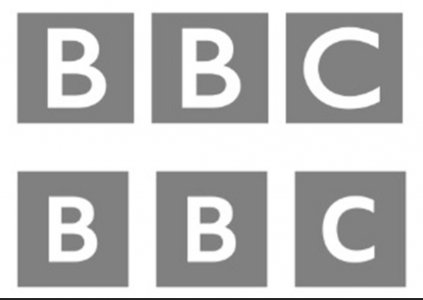
Truly baffling how shit like this is justified.
As for the BBC, they sell programmes globally and make some reyt money. Don't be fooled.
Some will probably know.
How much?
Truly baffling how shit like this is justified.
As for the BBC, they sell programmes globally and make some reyt money. Don't be fooled.
To fucking much seen it other week. That's what the 44p a day gets spent on.Anyone know how much of the license fee went on changing the logo from this to that? Or that to this?
Some will probably know.
How much?
View attachment 151864
Truly baffling how shit like this is justified.
As for the BBC, they sell programmes globally and make some reyt money. Don't be fooled.

- Joined
- Mar 17, 2014
- Messages
- 6,208
- Reaction score
- 15,836
As delightful a story as this is (I enjoyed hearing it from Roger Johnson himself when doing my BBC induction), it's a good example of the BBC not working as it should.That’s Nigel Johnson, he’s a Radio Stoke legend, well into his eighties and retiring at the end of this season. He wasn’t ever a broadcaster, he was a primary school headmaster who got a part-time job and kept it for decades.
He still refers to socks as stockings, when a ball is floated into the area “heads go up” and he makes regular mention of the inside right/left channel. He’s become increasingly erratic in his commentary and his gaffes are more frequent, but as a non-Stokie but who lived in the area for many years, he is the voice of Stoke City.
As an aside, his son is Roger Johnson who presents BBC North West news and sometimes BBC Breakfast.
BBC employees continuing service should be justified by the value they provide, not by sentiment or longevity of tenure. I can't understand how they justify keeping Nigel Johnson when on the other hand getting rid of Mark Lawrenson (a decision I agreed with, but it has to be fair across the board).
There are a whole load of younger people who could do a much better job than Nigel and set up Radio Stoke for a new generation of listeners. All that they're doing by sticking with the old guard is jeopardising their future as they continue their decline into irrelevance.
espoo blade
Well-Known Member
- Joined
- Oct 8, 2009
- Messages
- 2,685
- Reaction score
- 8,184
are we winning?My lad is receiving score updates for our game with Blackburn on the 4th of March.

Similar threads

- Replies
- 7
- Views
- 811

- Replies
- 50
- Views
- 5K


- Replies
- 12
- Views
- 2K

All advertisments are hidden for logged in members, why not log in/register?