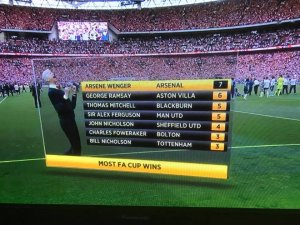
A bit misleading?

All advertisments are hidden for logged in members, why not log in/register?

Silent Blade

Well-Known Member
Joined
Aug 8, 2009
Messages
30,296
Reaction score
52,667
Location
Dronfield
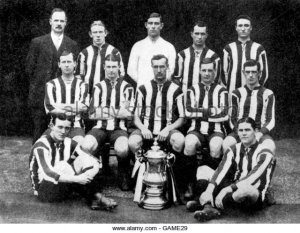
John Nicholson was really the club secretary rather the manager. We didnt have a manager until 1932. John Nicholson started working for us after we became a limited company on 18th April 1899. Our first FA Cup win was on 22nd April 1899 and I have tried to find out the exact date Nicholson started working for us. George Waller was our trainer for all these 4 Cup final wins and I think he was the closest to a manager we had in these days!

18699795_10155430657904791_2736358174491464978_n.jpg


John Nicholson was really the club secretary rather the manager. We didnt have a manager until 1932. John Nicholson started working for us after we became a limited company on 18th April 1899. Our first FA Cup win was on 22nd April 1899 and I have tried to find out the exact date Nicholson started working for us. George Waller was our trainer for all these 4 Cup final wins and I think he was the closest to a manager we had in these days!

View attachment 27294

George Ramsay was secretary at Villa. It was the norm for secretaries to pick players or at least sign them. The captain decided who played.
 
Presumably the captain's role at cricket and football was very similar for many years; the role in football became less and less important, but cricket has retained much of the traditional role. And in football, the manager's role is now becoming more and more focussed on coaching, with signings someone else's responsibility.
 
John Nicholson was really the club secretary rather the manager. We didnt have a manager until 1932. John Nicholson started working for us after we became a limited company on 18th April 1899. Our first FA Cup win was on 22nd April 1899 and I have tried to find out the exact date Nicholson started working for us. George Waller was our trainer for all these 4 Cup final wins and I think he was the closest to a manager we had in these days!

View attachment 27294

Not really.

It's a bit like today and the difference between head coach and manager. It's the same thing. Different job titles.

Nicholson was to all intents and purposes the manager. But the managers job was more administrative back then and less about training with the players and tactics. Nevertheless he was in charge of everything to do with the match day events and deservedly takes credit for being our most successful manager of all time and one of the most successful in the history of football.
 
Not really.

It's a bit like today and the difference between head coach and manager. It's the same thing. Different job titles.

Nicholson was to all intents and purposes the manager. But the managers job was more administrative back then and less about training with the players and tactics. Nevertheless he was in charge of everything to do with the match day events and deservedly takes credit for being our most successful manager of all time and one of the most successful in the history of football.
For me, George Waller was more nearer to a manager than Nicholson was. If Nicholson's first day as our secretary was the same as the first day we became a limited company (18th April 1899) I dont think he deserved any credit for our first FA Cup win (the final was 4 days later)
 
For me, George Waller was more nearer to a manager than Nicholson was. If Nicholson's first day as our secretary was the same as the first day we became a limited company (18th April 1899) I dont think he deserved any credit for our first FA Cup win (the final was 4 days later)

I fully understand what you are saying about this guy Waller being the one who was most closely involved with the playing side of things. So, in your mind, that makes him "the manager" because it's the thing that you have come to associate with "management" in football. What you are doing here though is taking a different era altogether and then applying current day norms and standards to it. And that doesn't actually get you anywhere, because the two situations are entirely different. It doesn't matter whether the tasks of a manager were different then to now - the definition of "manager" is "someone who manages, who has control and responsibility for people or situations". And that's what Mr John Nicholson was. He was "the manager" of the club - the one in control and charged with responsibility. I think it's good that you bring to our attention that a certain Mr George Waller was a key part in our success - but you can't rewrite history I'm afraid. Nicholson was the manager and he remains rightly acknowledged for that.
 
John Nicholson was really the club secretary rather the manager. We didnt have a manager until 1932. John Nicholson started working for us after we became a limited company on 18th April 1899. Our first FA Cup win was on 22nd April 1899 and I have tried to find out the exact date Nicholson started working for us. George Waller was our trainer for all these 4 Cup final wins and I think he was the closest to a manager we had in these days!

View attachment 27294

I don't know about the later 2 wins but the person who did the most coaching and deciding tactics for the 1897-1902 team was Ernest Needham, though he did not choose the team.
 
I fully understand what you are saying about this guy Waller being the one who was most closely involved with the playing side of things. So, in your mind, that makes him "the manager" because it's the thing that you have come to associate with "management" in football. What you are doing here though is taking a different era altogether and then applying current day norms and standards to it. And that doesn't actually get you anywhere, because the two situations are entirely different. It doesn't matter whether the tasks of a manager were different then to now - the definition of "manager" is "someone who manages, who has control and responsibility for people or situations". And that's what Mr John Nicholson was. He was "the manager" of the club - the one in control and charged with responsibility. I think it's good that you bring to our attention that a certain Mr George Waller was a key part in our success - but you can't rewrite history I'm afraid. Nicholson was the manager and he remains rightly acknowledged for that.
Would you give credit to John Nicholson for the 1899 FA Cup win? He became our secretary after we became a limited company on 18th April 1899. I am not even sure if he was at our club on that day. We beat Derby 4-1 in the FA Cup final 4 days after we became a limited company. I doubt if he made any input to that FA Cup win.

Here is a bit from George Waller's profile in SUFC Who's who by Denis Clareborough and Andy Kirkham

" United had no football manager in those days but were run by the decisions of the Football Committee. However they were enormously dependent on George's advice aided by that of the captain and no greater tribute can be given to him than to reflect on the honours that came to the club. The First Division Championship was won in 1898, the FA Cup in 1899 and 1902 - United were finalists in 1901- and the club could soon field a team of internationals.
George was also a tactical innovator: he and captains Hendry and Needham introduced the idea of one inside forward capable of accurate passing , in a deeper constructive way, bringing fast raiding wingers into play, often with long cross-field balls. The style remained a feature of United's play into the 1930s.
With a cheerful personality, he was also an expert in what we today would term "man Management" for "he seemed to know instinctively how to bring the best out of every man in his care" and he was "a guide, philosopher and a friend to all".
United continued to be run by their football committee and advised by George until 1932"

 
Would you give credit to John Nicholson for the 1899 FA Cup win? He became our secretary after we became a limited company on 18th April 1899. I am not even sure if he was at our club on that day. We beat Derby 4-1 in the FA Cup final 4 days after we became a limited company. I doubt if he made any input to that FA Cup win.

Here is a bit from George Waller's profile in SUFC Who's who by Denis Clareborough and Andy Kirkham

" United had no football manager in those days but were run by the decisions of the Football Committee. However they were enormously dependent on George's advice aided by that of the captain and no greater tribute can be given to him than to reflect on the honours that came to the club. The First Division Championship was won in 1898, the FA Cup in 1899 and 1902 - United were finalists in 1901- and the club could soon field a team of internationals.
George was also a tactical innovator: he and captains Hendry and Needham introduced the idea of one inside forward capable of accurate passing , in a deeper constructive way, bringing fast raiding wingers into play, often with long cross-field balls. The style remained a feature of United's play into the 1930s.
With a cheerful personality, he was also an expert in what we today would term "man Management" for "he seemed to know instinctively how to bring the best out of every man in his care" and he was "a guide, philosopher and a friend to all".
United continued to be run by their football committee and advised by George until 1932"
It is always pointless to compare different eras - and endlessly fascinating. What you describe above sounds very much like traditional county/test cricket set-ups. In another era, Jake Wright might have been a club captain for 10 years, just as Mike Brearley was a much better test captain than many of his more gifted team-mates.
 
Would you give credit to John Nicholson for the 1899 FA Cup win? He became our secretary after we became a limited company on 18th April 1899. I am not even sure if he was at our club on that day. We beat Derby 4-1 in the FA Cup final 4 days after we became a limited company. I doubt if he made any input to that FA Cup win.

Here is a bit from George Waller's profile in SUFC Who's who by Denis Clareborough and Andy Kirkham

" United had no football manager in those days but were run by the decisions of the Football Committee. However they were enormously dependent on George's advice aided by that of the captain and no greater tribute can be given to him than to reflect on the honours that came to the club. The First Division Championship was won in 1898, the FA Cup in 1899 and 1902 - United were finalists in 1901- and the club could soon field a team of internationals.
George was also a tactical innovator: he and captains Hendry and Needham introduced the idea of one inside forward capable of accurate passing , in a deeper constructive way, bringing fast raiding wingers into play, often with long cross-field balls. The style remained a feature of United's play into the 1930s.
With a cheerful personality, he was also an expert in what we today would term "man Management" for "he seemed to know instinctively how to bring the best out of every man in his care" and he was "a guide, philosopher and a friend to all".
United continued to be run by their football committee and advised by George until 1932"
So we 'invented' the role of the number 10?
 
He was "the manager" of the club - the one in control and charged with responsibility. I think it's good that you bring to our attention that a certain Mr George Waller was a key part in our success - but you can't rewrite history I'm afraid. Nicholson was the manager and he remains rightly acknowledged for that.


Or maybe he was the equivalent of the modern day director of football, whereas Waller's role might have been closer to that of the manager.

Either way, as Silent has pointed out, we can hardly credit him as being responsible for our 1899 cup success.
 
Would you give credit to John Nicholson for the 1899 FA Cup win? He became our secretary after we became a limited company on 18th April 1899. I am not even sure if he was at our club on that day. We beat Derby 4-1 in the FA Cup final 4 days after we became a limited company. I doubt if he made any input to that FA Cup win.

Here is a bit from George Waller's profile in SUFC Who's who by Denis Clareborough and Andy Kirkham

" United had no football manager in those days but were run by the decisions of the Football Committee. However they were enormously dependent on George's advice aided by that of the captain and no greater tribute can be given to him than to reflect on the honours that came to the club. The First Division Championship was won in 1898, the FA Cup in 1899 and 1902 - United were finalists in 1901- and the club could soon field a team of internationals.
George was also a tactical innovator: he and captains Hendry and Needham introduced the idea of one inside forward capable of accurate passing , in a deeper constructive way, bringing fast raiding wingers into play, often with long cross-field balls. The style remained a feature of United's play into the 1930s.
With a cheerful personality, he was also an expert in what we today would term "man Management" for "he seemed to know instinctively how to bring the best out of every man in his care" and he was "a guide, philosopher and a friend to all".
United continued to be run by their football committee and advised by George until 1932"

Yes I would give him credit as the manager because that's what he was. You're struggling to understand something here and that's the difference between involvement and responsibility.

Imagine you were made Governor of the Bank of England tomorrow at midday. At 1pm the Bank's value crashes through the floor. Who is responsible? YOU ARE! You might not have been in the job barely an hour. You might not have had any previous input into what has led to the current situation, but...it's your responsibility regardless. That, my friend, is how "responsibility" works. You can't say "it's not my fault" when things go wrong that you werent involved in. If you're in charge it's your problem. And similarly when things go well you can't say "it wasn't down to me because I only just started".

It cuts both ways. Whoever was boss at the time gets the brickbats or bouquets.
 
I fully understand what you are saying about this guy Waller being the one who was most closely involved with the playing side of things. So, in your mind, that makes him "the manager" because it's the thing that you have come to associate with "management" in football. What you are doing here though is taking a different era altogether and then applying current day norms and standards to it. And that doesn't actually get you anywhere, because the two situations are entirely different. It doesn't matter whether the tasks of a manager were different then to now - the definition of "manager" is "someone who manages, who has control and responsibility for people or situations". And that's what Mr John Nicholson was. He was "the manager" of the club - the one in control and charged with responsibility. I think it's good that you bring to our attention that a certain Mr George Waller was a key part in our success - but you can't rewrite history I'm afraid. Nicholson was the manager and he remains rightly acknowledged for that.

That's put you in your place Silent Blade


I fully understand what you are saying about this guy Waller being the one who was most closely involved with the playing side of things. So, in your mind, that makes him "the manager" because it's the thing that you have come to associate with "management" in football. What you are doing here though is taking a different era altogether and then applying current day norms and standards to it. And that doesn't actually get you anywhere, because the two situations are entirely different. It doesn't matter whether the tasks of a manager were different then to now - the definition of "manager" is "someone who manages, who has control and responsibility for people or situations". And that's what Mr John Nicholson was. He was "the manager" of the club - the one in control and charged with responsibility. I think it's good that you bring to our attention that a certain Mr George Waller was a key part in our success - but you can't rewrite history I'm afraid. Nicholson was the manager and he remains rightly acknowledged for that.

Hang on - isn't that entirely the point of Silent's OP? Silent was saying that it is misleading to compare Wenger with Nicholson (or any of the 'managers' on that list), since the roles are/were very different.
 
Yes I would give him credit as the manager because that's what he was. You're struggling to understand something here and that's the difference between involvement and responsibility.

Imagine you were made Governor of the Bank of England tomorrow at midday. At 1pm the Bank's value crashes through the floor. Who is responsible? YOU ARE! You might not have been in the job barely an hour. You might not have had any previous input into what has led to the current situation, but...it's your responsibility regardless. That, my friend, is how "responsibility" works. You can't say "it's not my fault" when things go wrong that you werent involved in. If you're in charge it's your problem. And similarly when things go well you can't say "it wasn't down to me because I only just started".

It cuts both ways. Whoever was boss at the time gets the brickbats or bouquets.

I disagree with the analogy there, in that exact situation you would definitely turn around and say "It's not my fault" and people would definitely accept that. I'm not necessarily saying you're wrong, but that's a bad comparison.
 
Sssshhh Silent let's not down grade the achievements of John Nicholson, if dear old auntie wants to put our former manager as 5th most successful FA Cup manager of all time who are we to argue with that. Think of all the piggies who will have been choking on their Saturday evening pork sarnie when they saw that little titbit flash up on screen :)
 
Yes I would give him credit as the manager because that's what he was. You're struggling to understand something here and that's the difference between involvement and responsibility.

Imagine you were made Governor of the Bank of England tomorrow at midday. At 1pm the Bank's value crashes through the floor. Who is responsible? YOU ARE! You might not have been in the job barely an hour. You might not have had any previous input into what has led to the current situation, but...it's your responsibility regardless. That, my friend, is how "responsibility" works. You can't say "it's not my fault" when things go wrong that you werent involved in. If you're in charge it's your problem. And similarly when things go well you can't say "it wasn't down to me because I only just started".

It cuts both ways. Whoever was boss at the time gets the brickbats or bouquets.
OK!
 
Him and Waller along with Ernest Needham

If people on here don't know my opinion and mini campaign, I'll say it again. Statue of that man in my avatar HAS to happen. The most decorated Blades player ever; how is he not recognised by the club?
 
If people on here don't know my opinion and mini campaign, I'll say it again. Statue of that man in my avatar HAS to happen. The most decorated Blades player ever; how is he not recognised by the club?

Because the club are absolutely shite at recognising anything that occured before 1975.
 
But Joe Shaw is in the car park, and no disrespect to a great player, but Joe won sod all in comparison.

Agree completely. Ernest Needham was an integral part of what could justifiably be called the best team in the country at one time.

And I don't want this to come across as a dig at undeniably great players, but for all the mythologising around the Currie/Woodward era, it yielded little in the way of tangible success.
Most of the figures who were there when we actually won things in the late 19th/early 20th century have been criminally underacknowledged.
 
Agree completely. Ernest Needham was an integral part of what could justifiably be called the best team in the country at one time.

And I don't want this to come across as a dig at undeniably great players, but for all the mythologising around the Currie/Woodward era, it yielded little in the way of tangible success.
Most of the figures who were there when we actually won things in the late 19th/early 20th century have been criminally underacknowledged.

I think in a 5 year period at the time, they were Champions, runners-up, cup winners twice and cup runners up twice. I don't think another club came close to matching that. And the man orchestrating the whole thing was Needham.
 
I think in a 5 year period at the time, they were Champions, runners-up, cup winners twice and cup runners up twice. I don't think another club came close to matching that. And the man orchestrating the whole thing was Needham.

He should have been voted as the greatest ever player and greatest ever captain in the club's history!
 
Yes I would give him credit as the manager because that's what he was. You're struggling to understand something here and that's the difference between involvement and responsibility.

Imagine you were made Governor of the Bank of England tomorrow at midday. At 1pm the Bank's value crashes through the floor. Who is responsible? YOU ARE! You might not have been in the job barely an hour. You might not have had any previous input into what has led to the current situation, but...it's your responsibility regardless. That, my friend, is how "responsibility" works. You can't say "it's not my fault" when things go wrong that you werent involved in. If you're in charge it's your problem. And similarly when things go well you can't say "it wasn't down to me because I only just started".

It cuts both ways. Whoever was boss at the time gets the brickbats or bouquets.


No, you are not. You are in the chair at that time, but in the circumstances you have just described no sane person on the planet could ever say you are responsible. That is not how it works and never has done in any area of work or life that I have ever lived in - even when Margaret Thatcher was PM.:)


Agree completely. Ernest Needham was an integral part of what could justifiably be called the best team in the country at one time.

And I don't want this to come across as a dig at undeniably great players, but for all the mythologising around the Currie/Woodward era, it yielded little in the way of tangible success.
Most of the figures who were there when we actually won things in the late 19th/early 20th century have been criminally underacknowledged.


I understand what you are saying about tangible success. The fact is we were a middling top division side at that time. No more, no less. But there is no mythology about it. Currie and Woodward were good. Very good. And along with other players delivered more success in terms of our average league position than any other Blades side since then.
 

All advertisments are hidden for logged in members, why not log in/register?

All advertisments are hidden for logged in members, why not log in/register?

Back
Top Bottom