Following the comments by
William Henry Foulkes in the adkins pre match wigan thread, its perhaps good to raise this thread from the ashes again to give some info on technology.
I can perhaps offer a little bit on Training/ Performance Zones, will try to listen to Adkins later and understand it a little more, so I’ve made some assumptions.
- Football League approved use of performance trackers in competitive games from mid 2015
- SUFC players use the “Catapult” vests for training – Did they appear to have a lump in between their shoulder blades during the game? If so its likely that this is what tracked the data on Sunday (and presumably in all games)
- GPS v Heart Rate Zones – Its unlikely that the zones are worked out from the GPS data alone, reading the catapult data sheets it seems that they have HR monitors as well, there will be an algorithm set up to monitor HR and GPS data to produce a report.
- Zones will be for each individual, so Sharp will work in different Zones to Collins, Edgar or Brayford.
Zones
The “Zones” for footballers will be specific (as opposed to cyclists/ Triathletes) which tend to work purely to Heart Rate Zones, I would suggest that footballers work on a combination of speed and HR to give the zones for the game.
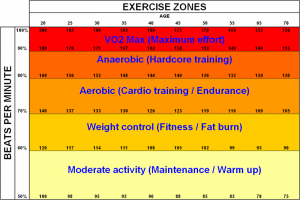
The Zones are therefore based on effort. So the Red Zone would be likely to be at between 80-90% effort, so higher heart rate and number of sprints etc. It’s unlikely that any footballer will work for a long time in the Red Zone, However, players like Basham, Hammond, Edgar, Collins and Sharp will be more likely to be in their red zones for longer as they are seeing more of the ball than perhaps Woolford.
United will probably calculate how long they expect and want players working in certain zones, so they should also train to this.
For example, when I train, I train at a higher HR than some of the people I train with. I can ride on the same ride as a mate, but my average HR will always be higher than his because I spend more time in the “80-90%” effort.
There are factors such as food and drink consumed before and after, long term fitness, clothing worn as these will all play a part in body temperature and cooling, however there may also be natural differences.
In Game Recovery
Because of the individual nature of the effort levels and also the individual themselves, each will require a different recovery before Tuesday.
United will see from the graphs the recovery times from the 80-90% efforts. Half time probably gives a chance to monitor recovery as well because they can down load the first half data. But more importantly, they will see how the in match recovery is going.
An indication that a player is fatiguing is following a high effort (80-90%), how quickly does his heart rate drop to perhaps 50%, again, they will have this set for individuals. The longer it takes to recover after a sprint(especially compared to normal games), generally this indicates fatigue
Post Match Recovery
Again, it’s different for individuals. I’m ok for about 2-3 days after a race, a few aches but physically I’m ok. After the 3 day mark though, I need extra recovery time.
So we’ll find that certain players may be ok for Tuesday, but not Saturday and vice versa.
The recovery training will be interesting as well. Personally I like to swim and recover, United will certainly run and the recovery will be an active recovery for most, so they’ll work on light cardio, no speed work, but perhaps some gym work.
Working on things like set pieces will be avoided, perhaps as they are quite exhausting due to the repetitive nature of being in and out of the red zone for short periods.
I’m sure that there are some sports scientists on here which will provide a better insight, but this is just my view from my training and testing over the last couple of years