
Coolblade
Member
- Joined
- May 11, 2015
- Messages
- 256
- Reaction score
- 1,757
A few observations from the stats (sadly only watched on tv this time!):
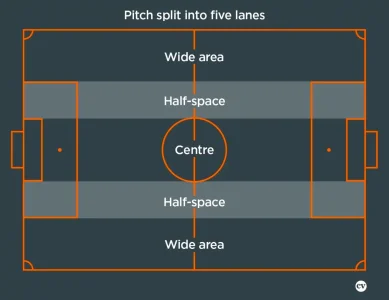
Team Set Up: We changed formation by lining up in a 4-4-2 out of possession, this time with a double pivot of Riedewald and Soumaré screening the half-spaces. Width was again our route to goal, with more focus on the left. Burrows pushed high and aggressive, while Seriki provided the outlet on the right but less frequently than in recent matches. The front two of Campbell and Cannon stretched Stoke’s back line, supported by O’Hare in the half-spaces.
The numbers tell the story: we won the xG battle 0.53 vs 2.05, shots 7 vs 15, shots on target 3 vs 4 and touches in their box, 21 v 32. Stoke had more possessions 53.4% vs our 46.6% and more corners 6 vs 2. So, Stoke had more of the ball, but we created far more danger. We didn’t just edge them; we doubled their attacking output in key zones.
First Half: Our shape was compact and disciplined. The chances were there even if the breakthrough wasn’t. We maintained defensive structure and created opportunities, but the final ball or finish eluded us before the interval.
Second Half: Usual territory loss as Stoke pushed possession up, but our defensive structure held. Clearances, 36 vs their 23, Interceptions: 14 vs 6, Recoveries: United 61 vs Stoke 52, with good numbers in midfield third (33 for us).
Defensive: Bindon made 12 clearances, 3 interceptions, 2 aerial wins, and was great under pressure; Tanganga with 6 clearances, 2 tackles, 2 interceptions was solid reading danger. But given his attacking contribution, Burrows with 5 clearances, 5 interceptions was a stand out, a complete LB performance.
Midfield: Riedewald anchored everything: 46 passes at 95.7% accuracy, 3 tackles, 1 interception, and a goal. He screened the back four, recycled possession, and popped up at the right moment to score. Soumaré supported well with 2 key passes and important defensive contributions in midfield duels, helping us win second balls despite Stoke’s aerial advantage.
The foul count stayed low (4 each), but Stoke’s aerial edge (20 vs 14) meant we had to scrap for second balls. That’s where Soumaré and Tanganga stepped up with key duels.
Creativity: We looked organised and threatening, and the stats back it up. We had far more key passes: 11 vs 3, spread across Burrows (3), O’Hare (3), Campbell (2), Seriki (1), Soumaré (2). With crosses, we attempted 7 vs Stoke’s 25, but our accuracy was better. Burrows attempted 5 with 2 accurate; Seriki delivered 1 accurate cross. Stoke’s 25 crosses were largely speculative from wide positions; ours came from dangerous overloads and created genuine threat.
Offence: Campbell & Cannon combined for 6 shots (Campbell 4, Cannon 2), with Cannon scoring and Campbell assisting, O’Hare chipped in with 2 shots and 3 key passes, linking midfield to attack.
Our goals: one from pressure inside the six‑yard area (Riedewald), one from a corner from cross pattern (Burrows to Cannon). Our xG of 2.05 was built on purposeful box entries and varied delivery angles, with left overload, central combinations, and quick switches.
Strategic thoughts:
1. Left-Side overload this time worked well. Burrows and O’Hare gave us penetration and control down the left. As mentioned after the Wrexham game, the ability to flip our attacking focus is key, and it worked brilliantly tonight.
2. Second-Ball still needs work . Stoke’s aerial edge (20 vs 14) meant we defended deep at times. Our 36 clearances show resilience, but we need a better midfield screen to stop repeat entries. Win the scraps, and we stop the panic defending.
3. Efficiency over volume: 15 shots, 11 key passes, 2 goals from 2.05 xG shows we were reasonably clinical but could do better.
4. Discipline under pressure. The compact back four prevented the equaliser through late corner pressure. Pearson’s red at 88’ took the edge off Stoke’s final push and gave us breathing room.
5. Game management Improved, although not perfect: Our pass accuracy (76.9%) and recoveries (61) show we stayed calm under pressure despite ceding possession. Generally we defended with organisation and attacked with purpose.
Looking forward:,
1. Set Pieces: We turned a corner into a cross into the winning goal. We are presumably pre-planning one back-post overload and one near-post screen per game to raise our set-piece xG
2. Compressing the lanes at corners. When Stoke piled on the pressure between 63’-67’ and 78’-83’, our shape coped, but we invited second phases. Add a fixed exit runner (the fresh Chong/Bamford profile helps) to turn clearances into counter-attacking territory.
3. Use the 74’ triple sub as a template for better control. This time it worked better (again not perfectly) Bamford for hold-up, Chong for carry and press, Arblaster for recycle: these roles map to protect a one-goal lead away from home.
This was a performance built on defensive solidity and attacking efficiency. We didn’t dominate the ball, but we dominated the box. When Burrows and O’Hare linked with Campbell and Cannon, we looked dangerous. When Riedewald anchored, we looked secure.
Away at Stoke is never easy and this was a crucial bounce back.
Happy new year to all!
UTB
Team Set Up: We changed formation by lining up in a 4-4-2 out of possession, this time with a double pivot of Riedewald and Soumaré screening the half-spaces. Width was again our route to goal, with more focus on the left. Burrows pushed high and aggressive, while Seriki provided the outlet on the right but less frequently than in recent matches. The front two of Campbell and Cannon stretched Stoke’s back line, supported by O’Hare in the half-spaces.
The numbers tell the story: we won the xG battle 0.53 vs 2.05, shots 7 vs 15, shots on target 3 vs 4 and touches in their box, 21 v 32. Stoke had more possessions 53.4% vs our 46.6% and more corners 6 vs 2. So, Stoke had more of the ball, but we created far more danger. We didn’t just edge them; we doubled their attacking output in key zones.
First Half: Our shape was compact and disciplined. The chances were there even if the breakthrough wasn’t. We maintained defensive structure and created opportunities, but the final ball or finish eluded us before the interval.
Second Half: Usual territory loss as Stoke pushed possession up, but our defensive structure held. Clearances, 36 vs their 23, Interceptions: 14 vs 6, Recoveries: United 61 vs Stoke 52, with good numbers in midfield third (33 for us).
Defensive: Bindon made 12 clearances, 3 interceptions, 2 aerial wins, and was great under pressure; Tanganga with 6 clearances, 2 tackles, 2 interceptions was solid reading danger. But given his attacking contribution, Burrows with 5 clearances, 5 interceptions was a stand out, a complete LB performance.
Midfield: Riedewald anchored everything: 46 passes at 95.7% accuracy, 3 tackles, 1 interception, and a goal. He screened the back four, recycled possession, and popped up at the right moment to score. Soumaré supported well with 2 key passes and important defensive contributions in midfield duels, helping us win second balls despite Stoke’s aerial advantage.
The foul count stayed low (4 each), but Stoke’s aerial edge (20 vs 14) meant we had to scrap for second balls. That’s where Soumaré and Tanganga stepped up with key duels.
Creativity: We looked organised and threatening, and the stats back it up. We had far more key passes: 11 vs 3, spread across Burrows (3), O’Hare (3), Campbell (2), Seriki (1), Soumaré (2). With crosses, we attempted 7 vs Stoke’s 25, but our accuracy was better. Burrows attempted 5 with 2 accurate; Seriki delivered 1 accurate cross. Stoke’s 25 crosses were largely speculative from wide positions; ours came from dangerous overloads and created genuine threat.
Offence: Campbell & Cannon combined for 6 shots (Campbell 4, Cannon 2), with Cannon scoring and Campbell assisting, O’Hare chipped in with 2 shots and 3 key passes, linking midfield to attack.
Our goals: one from pressure inside the six‑yard area (Riedewald), one from a corner from cross pattern (Burrows to Cannon). Our xG of 2.05 was built on purposeful box entries and varied delivery angles, with left overload, central combinations, and quick switches.
Strategic thoughts:
1. Left-Side overload this time worked well. Burrows and O’Hare gave us penetration and control down the left. As mentioned after the Wrexham game, the ability to flip our attacking focus is key, and it worked brilliantly tonight.
2. Second-Ball still needs work . Stoke’s aerial edge (20 vs 14) meant we defended deep at times. Our 36 clearances show resilience, but we need a better midfield screen to stop repeat entries. Win the scraps, and we stop the panic defending.
3. Efficiency over volume: 15 shots, 11 key passes, 2 goals from 2.05 xG shows we were reasonably clinical but could do better.
4. Discipline under pressure. The compact back four prevented the equaliser through late corner pressure. Pearson’s red at 88’ took the edge off Stoke’s final push and gave us breathing room.
5. Game management Improved, although not perfect: Our pass accuracy (76.9%) and recoveries (61) show we stayed calm under pressure despite ceding possession. Generally we defended with organisation and attacked with purpose.
Looking forward:,
1. Set Pieces: We turned a corner into a cross into the winning goal. We are presumably pre-planning one back-post overload and one near-post screen per game to raise our set-piece xG
2. Compressing the lanes at corners. When Stoke piled on the pressure between 63’-67’ and 78’-83’, our shape coped, but we invited second phases. Add a fixed exit runner (the fresh Chong/Bamford profile helps) to turn clearances into counter-attacking territory.
3. Use the 74’ triple sub as a template for better control. This time it worked better (again not perfectly) Bamford for hold-up, Chong for carry and press, Arblaster for recycle: these roles map to protect a one-goal lead away from home.
This was a performance built on defensive solidity and attacking efficiency. We didn’t dominate the ball, but we dominated the box. When Burrows and O’Hare linked with Campbell and Cannon, we looked dangerous. When Riedewald anchored, we looked secure.
Away at Stoke is never easy and this was a crucial bounce back.
Happy new year to all!
UTB


 )
)