
NotTheSharpest
Member
I am reliably informed that Chris is considering the next iteration of TuftyBall. Overlapping goalkeeper.........or goalie wag to most of us!

Follow along with the video below to see how to install our site as a web app on your home screen.
Note: This feature may not be available in some browsers.
All advertisments are hidden for logged in members, why not log in/register?


Bergen Blade where are you?
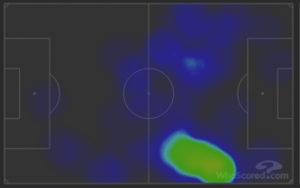


Yes I figured out he thought the ball boy in the white tabard was a player.It was Duffy but other than that I said exactly the same


Bloody hell BushBlade yes it does! All my life I have been wrong and I truly thank you for correcting me in this manner. However, it does describe the way we play football even though the definition was wrong which you most appropriately and publicly outlined. Thank you so much.Actually a dervish isn’t a sword.
https://www.google.co.uk/search?q=dervish+meaning&ie=UTF-8&oe=UTF-8&hl=en-gb&client=safari
Hope that helps

Don't know about 'helps' but it's made me feel very dizzy!With a rotating front two, intermingling with a rotating Mid three supported by a rotating back five assisted by two of those , or three or four, bombing on at any one time and rotating and interchanging with any of the other two rotating and interchanging lines, it’s called the whirling dervishes. Dervishes are a type of sword, dagger or Blade so, I guess it’s an appropriate style of play for Dem Blades!
Hope this helps


One last thing, we don't just let all players bomb forward with no thought of the risks involved. Egan normally stays back and is mainly focused on our defending. Norwood often comes deep and very rarely gets into the box. If O'Connell is overlapping down our left, I'm sure Basham takes up an position that allows him to get back if we lose the ball. It also helps that we don't lose it a lot, because most players are very comfortable on the ball. We're also a hard working team and all players are expected to help out defensively.


I have been thinking about this a lot recently and although we all know we have been playing with three over lapping centre backs, wingbacks and two forwards. At times I have to concede I can't keep up with the chaos that seems to be on the pitch, which I firmly believe neither can the opposition!
Do we have any master tacticians on this board who can explain our system succinctly?
Forget who it was against but we scored a goal at the BL end earlier in the season and the 'overload' was created by Baldock, Basham and Stevens.
I put it on here and drew a triangle on them. Baffling that from open play a team can have a RWB, LWB and RCB in a RW position at the same time.
Edit. It was against QPR.
Stevens on the byline, Baldock on the ball. Basham in the box
View attachment 50659


Overloads.

nobody could explain the Dutch side in the 1974 World Cup & they were probably the most exciting team i've ever seen.I have been thinking about this a lot recently and although we all know we have been playing with three over lapping centre backs, wingbacks and two forwards. At times I have to concede I can't keep up with the chaos that seems to be on the pitch, which I firmly believe neither can the opposition!
Do we have any master tacticians on this board who can explain our system succinctly?

I would say that the formation we play wouldn’t work without the extreme hard work and brilliance of Norwood and Fleck. Not only do they direct us going forward but they have to cover the holes when defenders and wing backs go on a jolly boys outing


DEM BLADES did a writing competition a few months back. I wrote an entry, but I haven't heard anything since, so I'm asuming they're not going to use it, I suppose I can post it here:
WHAT IS WILDERBALL?
Wilderball is the amalgamation of style and substance: it’s a perfect blend of effectiveness and entertainment. During his tenure at United, regular observers will have noticed the many facets of United’s game that make them stand out from the crowd in the championship, and have allowed them to blossom into one of the league’s best footballing teams.
Tactical features
The last decade has seen many changes in modern football, in particular, the way teams defend. Many of the world’s elite have adopted a high pressing game – popularised by Jurgen Klopp at Dortmund, and otherwise known as the Gegenpress. The concept is to win back possession immediately, before the opposition has time to gain composure on the ball. It often starts at the frontline and heavily relies on speed, organisation and fitness. While Wilder’s style couldn’t be described as the Gegenpress in it’s purest form, it’s clear that he has extracted parts of the high-press philosophy and applied it to Sheff Utd.
Once the ball has been won back, keeping possession is key. Wilder’s United always attempt to be positive with the ball, moving forward. However, they almost always favour keeping the ball if there are no better options. To the less-cultured this can be seen as ‘sideways passing’ or ‘playing your way out of trouble’ – yet few can argue it isn’t extremely effective. This can only be made possible by players always being ready to receive the ball and being confident once it arrives, epitomised by the likes of Paul Coutts/Ollie Noorwood and Mark Duffy, amongst others.
Wilder isn’t dogmatic in his approach though, and this can be seen in the team’s distribution: While short passing triangles can be a thing of beauty, he’s not afraid to be pragmatic at times; occasionally employing longer passing and a traditional target man. Being able to utilise a range of passing allows the team to be flexible, and change their approach, often in game.
Making use of an aerial presence requires quality wide play – something the blades are more than capable of. Full backs are afforded the freedom to get high up the pitch, and are often joined by a centre-back in either Chris Basham or Jack O’Connell, creating an overload on one side and multiple opportunities to cross. While a high-press or possession football may be nothing new, this feature of over-lapping centre-backs has been revolutionary and is often considered the hallmark of Wilderball.
Formation
After a tough start to life in league one, Wilder adopted a 3-4-1-2 formation and seemingly never looked back. When under the cosh, it allows for 5 at the back, creating defensive rigidity and making the team hard to break down. In the transition from defence to attack, it helps United dominate midfield, giving the man on the ball a plethora of options. In the final third it creates a potent attacking trident, supplemented by a combination of midfielders and wing backs.
However, one of the key’s to Wilder’s tactical approach is adaptability: while not always obvious, this applies to the formation as well. During games, the side can seamlessly switch from 3-4-1-2 to a 4-4-2 with a narrow diamond (amongst other combinations). This can be achieved swiftly, with the relocation of adaptability personified, Chris Basham, from centre-back to midfield.
Much gets made of formation, and players are more than simply coloured magnets on a board. Players in a Chris Wilder team are expected to be fluid and pragmatic; supporting one another going forward and plugging subsequent holes when the opposition counters.
Player roles
At the time of Wilder’s appointment, playing 3 at the back, with attacking wing backs was in vogue; with Anontio Conte embarking on a title-winning season with Chelsea, employing strikingly similar tactics. Wilder didn’t switch formations to pay homage to the Italian though: He did it to get the best of out his players, putting them in roles that played to their strengths. Again, this a central principle of Wilderball: adaptability. Even some of the greatest managers fail to display this kind of flexibility, evidenced by the torrid time Maurizio Sarri appears to be having at Chelsea. Where Sarriball fails by shoehorning players to suit the system, Wilderball excels by modifying his style to properly incorporate his better players.
Though Mark Duffy had spent much of his career as a winger, his best success, at Burton, had been in the no. 10 role. Wilder recognised this, helping Duffy become one of the most influential players at the club. Billy Sharp’s goal scoring ability had always been evident, but not all of his previous managers knew how to properly utilise him. Wilder did, as demonstrated by his goal per game ratio changing from 0.43 over his career, to 0.6 after his arrival.
Some players were handed a new role, based on their better attributes: Kieron Freeman was a (largely unconvincing) full-back; after, he transitioned into a marauding wing-back, bagging 11 goals in Wilder’s first season. Paul Coutts had spent most of his career playing as a right-winger, and had been written off by a large portion of the support: Wilder shifted him centrally, into the “regista” role, where he dictated games from deep, becoming a fan favourite in the process. Chris Basham was a jack of all trades, though had never discovered his natural position. Under Wilder’s tutelage he became a centre-back with a license to go forward. This ability to recognise a player’s strengths, and deploy them to suit, allows his team to thrive.
Other features
Beyond tactics, systems and player instructions there are some traits to Wilderball that often go over-looked, including the importance of fitness. A high tempo, pressing game is only made possible with an extremely fit squad. This devotion to fitness is evidenced by United’s fantastic injury record since Wilder’s (And head of sports science, Matt Prestridge) arrival. Other staff members, such as Alan Knill deserve credit for the way United play: Knill is highly respected within the game, and some of his innovations are responsible for the Blades’ recent success.
It’s no secret that Wilder’s United are punching above their weight, especially financially. This ability to squeeze every last drop out of the players comes down to motivation. Players like Jake Wright and David McGoldrick have been propelled to levels beyond reasonable expectation. This ability to inspire his players has seen United defy the odds for the second season running.
So, what is Wilderball? While on a tactical level it’s a composition of innovative systems, instructions and philosophies, it can also be seen as something far more fundamental: The ability to adapt, the ability to motivate and the ability to win. These sorts of skills could take him to the very top, let’s just hope that’s with us


All advertisments are hidden for logged in members, why not log in/register?


